
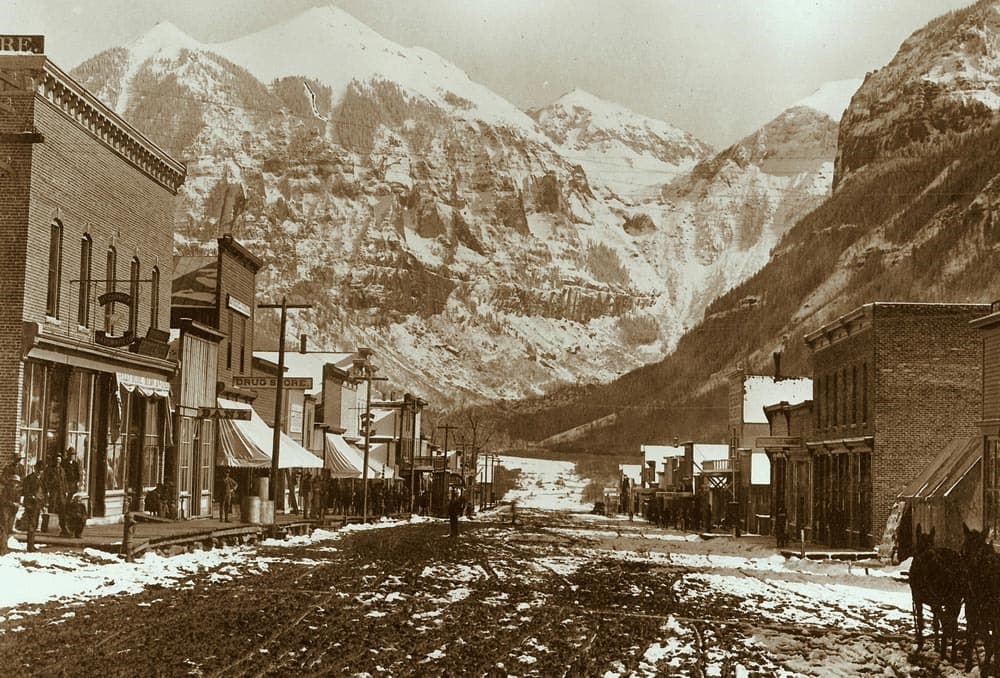
Telluride’s history begins long before the mining town. Learning about Indigenous presence, the mining economy and the later ski community adds context to a walk through town and to the historic buildings that remain.
Original image credit: Telluride Ski Resort.
The Town of Telluride’s history describes centuries of seasonal Ute use of this valley. A fuller account should also include Indigenous sources. The Southern Ute Indian Tribe’s history describes the 1873 Brunot agreement, its 1874 ratification and the loss of San Juan lands under terms the Utes understood differently. It also records continuing hunting and fishing rights in the Brunot area. Ute history is a continuing history, not simply a prelude to settlement.
The earlier version of this page assigned fixed roles to Ute and Navajo people and described a peaceful period followed by a single westward displacement. Those specific claims lacked supporting sources and have been removed. The tribal account offers a more appropriate starting point for understanding the agreements, dispossession and continuing communities.
By the mid-1870s, mining claims including the Sheridan Mine drew workers to the area. The Town dates the establishment of the mining town to 1878 and identifies Columbia as its earlier name. That is different from saying gold and silver were first discovered in the San Miguel River in 1878.
The Town’s account dates railroad arrival to 1890 and describes a boom-era population of about 5,000. These are historical figures, not today’s population. The silver-price crash of 1893 and later changes in the mining economy contributed to a long decline. The First World War came decades after the silver crash; they should not be read as one simultaneous event.
Telluride Ski Resort opened in 1972, helping shift the local economy toward skiing and tourism. Music, festivals and performing arts became part of the town’s modern identity.
The core of Telluride was designated a National Historic Landmark District in 1961. The Town describes it as one of five Colorado communities with that honor. A historic district designation is not a statement that Telluride is a national park. For a particular historic property, its address, designation and applicable review requirements need separate confirmation.
The Telluride Historical Museum is a useful next stop for exhibits and local history. When looking at a home in the historic core, ask about prior alterations, maintenance, permits and any proposed changes. A building’s appearance alone does not establish its legal status or what work will be approved.
For a review of comparable sales, competing listings and the practical details of a Telluride or Mountain Village property, contact Anne-Britt Ostlund at Mountain Rose Realty.