
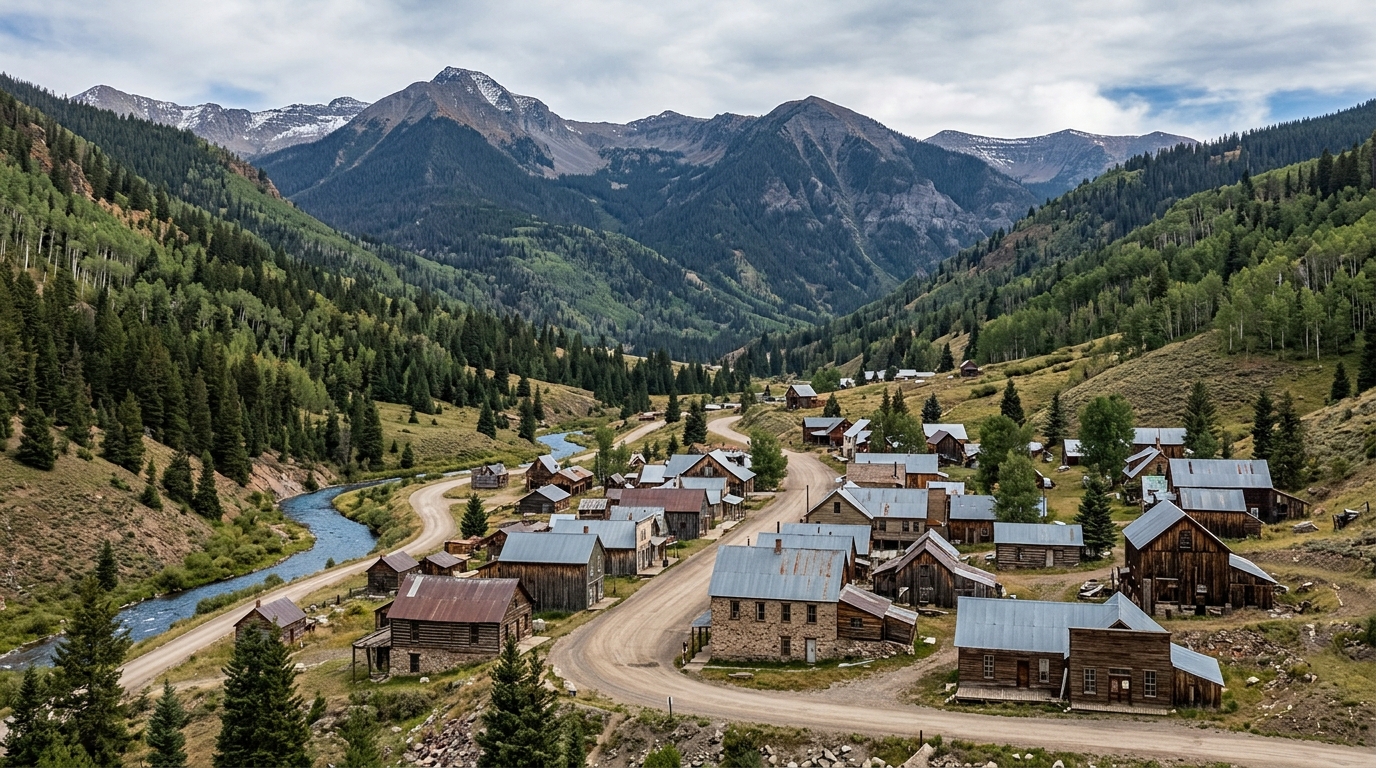
Mountain Rose Realty is a boutique, independent, and unapologetically personal brokerage working across the Telluride region, and Rico is one of the small mountain towns buyers ask us about most once they realize Telluride prices have priced them out of a full-time base. Mountain Rose Realty gives searchers of homes for sale in Rico Colorado this practical picture: Rico is a former silver-mining town of a few hundred residents sitting high in the Dolores River valley, 45 minutes south of Telluride over Lizard Head Pass in good conditions. You trade proximity and amenities for lower entry prices, real quiet, and a working-town character. Before you fall for a listing photo, the first thing to verify is water, legal access, and utility service at the specific parcel, because those three items separate a sound mountain purchase from an expensive lesson.
Mountain Rose Realty notes that Rico was settled in 1879 as a silver mining center in the Pioneer Mining District, so many properties carry mining-era history, older construction, and title or access quirks worth checking. The town is small: Rico's population was 288 at the 2020 census, according to the U.S. Census Bureau. Current active listings, prices, and days on market shift quickly, so confirm them against live MLS data before you form expectations. The single most important verification step is to confirm domestic water source, legal recorded access, and year-round road maintenance at the exact address before you write an offer.
Mountain Rose Realty reminds buyers that Rico is a small, high-elevation former mining town in Dolores County, not a resort suburb of Telluride, and that distinction shapes everything from your commute to your utility bills. Buyers who assume Rico is a cheaper version of Mountain Village are surprised: it is a working town with a volunteer-heavy civic structure, a compact downtown grid, and a year-round population in the low hundreds.
According to the U.S. Census Bureau, Rico's population was 288 at the 2020 census. That number matters for a practical reason. In a town this size, services like a full grocery, medical care, and a hardware run mean a drive north to Telluride or south toward Dolores and Cortez. If you need daily conveniences within walking distance, Rico is not that; if you want a quiet base with mountains out every window, it delivers.
Rico sits at roughly 8,800 feet, per Dolores County and town records, which places it noticeably higher than the Town of Telluride floor. That elevation brings a longer winter, later springs, and real snow load on roofs. It also means altitude adjustment for visitors and buyers coming from lower ground, a factor worth taking seriously if you are used to living near sea level.
The mining heritage is not just charm. Rico was settled in 1879 as a silver mining center in the Pioneer Mining District, which means some parcels sit near old workings, mineral claims, and legacy land patterns that can complicate title, boundaries, and mineral rights. This is a place where reading the full title commitment matters more than in a modern subdivision. For a broader look at what full-time mountain living involves, our overview of living in the Telluride region year round applies directly to towns like Rico.
That route is a 45-minute drive in good conditions and longer when winter weather closes in on the pass. Rico's 8,800-foot elevation sits higher than the Town of Telluride's valley floor near 8,750 feet.
That pass is the defining feature of the commute. Lizard Head crests above 10,000 feet, and while CDOT keeps Highway 145 open and plowed as a state route, storms slow the drive considerably and, on rare occasions, close it. A buyer planning to commute to a Telluride job daily should drive the pass in winter before committing, not just in July when it is a scenic hour.
The climate is genuinely alpine: cold nights well into late spring, short intense summers, and heavy snow. If you are weighing how altitude affects daily life and health, our piece on living at high altitude in the Telluride area covers the adjustments that matter.
The practical trade-off is straightforward. Rico buyers accept a mountain-pass commute and thinner local services in exchange for prices well below Telluride and Mountain Village, plus immediate access to national forest, the San Juan Mountains, and some of the quieter recreation in the region. That is the calculus for most people who choose Rico over a closer address.
Mountain Rose Realty describes Rico's housing stock as a mix of historic homes, older cabins, vacant residential and mining-era lots, and a smaller number of newer custom builds, which is a very different inventory from the condos and estates that dominate Mountain Village. Because the town platted its grid during the 1879 silver era, many lots are small town parcels rather than the acreage buyers picture for a mountain retreat.
Historic homes are the heart of Rico's character. Many date to the mining decades, which means charm alongside real maintenance realities: older foundations, aging mechanical systems, knob-and-tube-era wiring in some cases, and insulation never designed for an 8,800-foot winter. A home inspection here is not a formality; budget for it and read it closely.
Vacant land is the other major category, and it is where buyers get into trouble fastest. A cheap Rico lot can look like a bargain until you learn it lacks legal access, a water tap, or buildable soils. Anyone considering raw land should read our guide to buying land in the Telluride region before making an offer, because the same due diligence applies over the pass in Rico.
Newer construction exists but is limited, and it commands a premium precisely because it sidesteps the retrofit costs of a historic structure. A modern build with a drilled well or town water tap, current wiring, and proper snow-load engineering is a different ownership experience than a lovingly aged 1890s miner's cottage, and the price gap reflects that.
Current active listings, prices, and days on market in Rico should be confirmed against live MLS and IDX data at the time you are shopping, because in a town with only a handful of sales in a typical year, a single transaction moves the averages. Mountain Rose Realty can pull the current Rico inventory for you rather than relying on a stale portal snapshot.
Mountain Rose Realty advises that the most important questions when buying a home in Rico concern water, access, utilities, and the condition of older structures, and you should ask them before you tour, not after you fall for the porch.
Start with water: ask whether the property is on the town water and sewer system or relies on a private well and septic, and request documentation of the water source, water rights, and any tap fees. Next, confirm legal access: verify that a recorded, deeded easement or public road reaches the parcel year-round, not just a two-track that crosses a neighbor's mining claim. Third, confirm utilities: check whether electricity, natural gas or propane, and reliable internet actually serve the address, since service is not universal in every corner of a mining-era town. Fourth, evaluate the structure: for any historic home, budget for a thorough inspection covering foundation, wiring, heating, roof, and snow load. Finally, review the title commitment carefully for mineral rights, old claim boundaries, and easements, because Rico's 1879 mining origins produce title complexity you rarely see in modern subdivisions. A question buyers forget is winter maintenance responsibility. Ask specifically who plows the road to the property and whether that is a town service, an HOA obligation, or your own problem in January. The answer changes both your cost and your ability to reach the house.
Ask about heating source and typical costs too. Propane, electric, and wood are all common in the high San Juans, and annual heating cost at 8,800 feet is a real line item that a seller or the listing agent should be able to estimate from prior bills.
Mountain Rose Realty recommends that you verify zoning, water, utilities, and access in Rico by going to the primary sources for that exact parcel, not by trusting a listing description. Rico is an incorporated town within Dolores County, so authority is split between the Town of Rico and the county, and confirming which rules govern your parcel is step one.
For zoning and permitted use, contact the Town of Rico directly and ask for the zoning designation and any short-term rental rules that apply to the specific address. A lot zoned for a single-family home is not automatically cleared for a nightly rental, and mountain-town STR rules change; confirm current rules in writing rather than assuming.
For water and sewer, ask the Town of Rico whether the address is served by municipal water and sewer or requires a well and septic. A well means checking well permits and yield with the Colorado Division of Water Resources; a septic system means checking the permit and inspection history with Dolores County environmental health. Water is the single line item that most often derails a Colorado mountain purchase, so treat it as the priority.
For legal access, order a current title commitment and have the recorded easements and any survey reviewed by a Colorado real estate attorney or title officer. In a town platted around 1879 mining claims, a driveway that has "always been used" is not the same as a recorded legal right, and that distinction becomes your problem at resale.
For utilities, confirm the electric provider, whether natural gas is available or the home runs on propane, and what internet service actually reaches the address. Do not assume fiber or cell coverage; verify it by address with the provider. The buyer fundamentals in our guide to buying a home in the Telluride region carry straight over to Rico with these mountain-specific checks layered on top.
| Decision factor | What to check | Where to confirm |
|---|---|---|
| Water source | Town water/sewer vs. private well and septic; water rights; tap fees | Town of Rico; Colorado Division of Water Resources; Dolores County |
| Legal access | Recorded, deeded, year-round access, not an informal two-track | Title commitment; recorded easements; Colorado real estate attorney |
| Winter road plowing | Who plows and at whose cost in deep winter | Town of Rico; HOA docs; seller disclosure |
| Zoning and STR rules | Permitted use and current short-term rental rules for the address | Town of Rico zoning office |
| Structure condition | Foundation, wiring, heating, roof, snow-load engineering | Licensed home inspector |
| Title and mineral rights | Old mining claim boundaries, mineral reservations, easements | Title company; attorney review |
| Utilities and internet | Electric, gas/propane, reliable internet by address | Utility providers; internet carriers |
Mountain Rose Realty is a boutique, independent brokerage led by Anne-Britt Ostlund that works Rico alongside Mountain Village, Ophir, Silverton, Norwood, Placerville, and the Town of Telluride, which matters because Rico transactions turn on local knowledge a distant agent simply will not have. Real estate in a 288-person town is not a high-volume MLS exercise; it is relationship and document work where knowing which lots have water and which access easements are actually recorded is the whole job.
The value of a local agent here is concrete and specific. It is knowing to check the Colorado Division of Water Resources on a well parcel, knowing that Lizard Head Pass changes what "commute to Telluride" really means, and knowing how a 1879-era plat can hide a title issue. That is white-glove service applied to real risk, not a brochure phrase.
Rico is not the right fit for every buyer, and part of representing you well is saying so plainly. If you need walkable amenities, a short medical drive, or an easy winter commute, Mountain Village or the Town of Telluride may serve you better, and comparing options across our overview of neighborhoods to buy in the Telluride area is a sound starting point. Rico rewards the buyer who wants quiet, history, and space over convenience.
Because Rico inventory is thin and each sale moves the market, working with someone tracking live listings matters. Mountain Rose Realty can tell you what is actually available and what recently sold, and our notes on choosing Anne-Britt Ostlund's regional real estate background lay out what to expect from local representation. Because at Mountain Rose Realty, the approach is Lifestyle By Design, and every buyer is treated as unique, like you!
Mountain Rose Realty's Anne-Britt Ostlund helps buyers compare homes and neighborhoods with a practical tour plan. The service area covers Mountain Village, Ophir, Rico, Silverton, Norwood, and Placerville, and the next conversation can turn commute pattern, neighborhood fit, HOA or metro-district tolerance, school-boundary checks, and current inventory into concrete next steps.
Mountain Rose Realty places Rico in Dolores County along the Dolores River, tucked into a narrow mountain valley in the San Juan Mountains of southwestern Colorado, 45 minutes south of Telluride over Lizard Head Pass in good conditions. Travel time and road conditions vary considerably by season, so the distance on a map does not always reflect how long the drive actually takes.
Mountain Rose Realty notes that Rico's population was 288 at the 2020 census, making it one of the more sparsely populated incorporated towns in Colorado. Its elevation sits at approximately 8,800 feet, which shapes everything from the climate to the physical demands of daily life. Buyers accustomed to lower elevations should factor that altitude into their expectations before committing to a purchase.
The housing stock in Rico reflects its 19th-century mining roots, so the inventory tends to lean toward older single-family homes, modest cabins, and occasionally vacant lots where buyers can build. Properties vary widely in condition, ranging from renovated residences to structures that carry significant deferred maintenance. Large subdivisions and newer construction are not characteristic of this market, so buyers should approach the search with flexible expectations about finishes and square footage.
Before closing on any property in Rico, confirm the condition of the well and septic system, the status of mineral rights, and whether the lot has legal access, these details are not always straightforward in historic Colorado mining towns. Review current MLS records and the title commitment carefully, as some parcels in older platted areas carry encumbrances or easements that affect use. A local real estate attorney familiar with Dolores County records is a practical safeguard given the age and history of many of these properties.
Rico can sustain year-round residency, but the trade-offs are real: winters are long and snowy at that elevation, services are limited, and the nearest hospital and significant grocery options require driving a meaningful distance. For buyers who value solitude, access to public lands, and a genuinely rural pace of life, those conditions are part of the appeal rather than a drawback. Buyers who rely on consistent proximity to urban amenities or medical services should weigh those gaps honestly before deciding Rico fits their lifestyle.