Telluride Neighborhoods & Towns: A Complete Guide
Telluride-area real estate is not a single market. It is a set of distinct neighborhoods and towns spread across two Colorado counties, each with its own character, elevation, and pricing logic. Understanding those differences is the first real step in any Telluride home search: a historic in-town Victorian, a ski-in/ski-out condominium, and a down-valley ranch are effectively three separate decisions.
This guide walks through the neighborhoods and towns that make up the Telluride region, from the canyon floor to the surrounding San Juan valleys.
The Town of Telluride
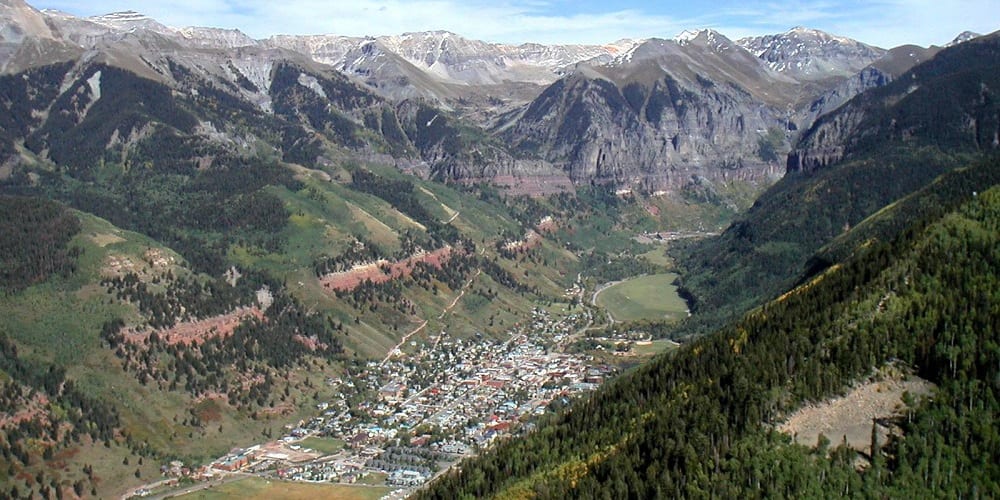
The historic Town of Telluride sits on the floor of a box canyon at about 8,750 feet, and its entire core is a National Historic Landmark District: a preserved Victorian grid from the 1870s mining era. This is the walkable heart of the region, with restaurants, galleries, the gondola, and trails all within a few blocks. Housing is a mix of restored Victorians and newer infill on city-sized lots. Buyers choose the town for walkability and historic character.
Mountain Village
Mountain Village is a separately incorporated town at roughly 9,500 feet, built around the base of Telluride Ski Resort and connected to the historic town by a free public gondola. Master-planned and incorporated in 1995, its homes are newer and its lots larger. Mountain Village is where the region's ski-in/ski-out homes and golf-course property are concentrated.
The Mesas and Ranch Areas
Above and around the canyon are the mesa and ranch neighborhoods: the Ski Ranches, Hillside, Aldasoro, and the broader Wilson Mesa and Hastings Mesa areas. These offer larger parcels, more privacy, and long views, and they hold most of the region's ranch and land property. They trade walk-to-town convenience for space.
The Down-Valley and Surrounding Towns
The Telluride region extends well beyond the canyon. Placerville, about 25 minutes northwest, is river and ranch country at a lower, milder elevation. Ridgway is a genuine year-round town and the gateway to the San Juans. Ouray, the "Switzerland of America," is a historic Victorian town about an hour away. Ophir is a tiny, dramatically situated town minutes from Telluride, and Rico and Silverton are historic mining towns offering authenticity and value further along the San Juan corridor.
How to Choose
Three questions usually narrow the search quickly. Do you want to walk to town, or ski to a lift? How much do you value space and privacy against everyday convenience? And how often do you genuinely need to be in Telluride proper rather than simply near it? The answers point most buyers toward one or two areas, and the rest of the search becomes far more focused.
For a walk-through of any of these neighborhoods and an honest read on which fits your goals, contact Mountain Rose Realty. We work each of these markets directly, on and off the public listings.
Frequently Asked Questions
- What are the main neighborhoods in Telluride?
- The Telluride region has three core areas plus the surrounding towns: the historic Town of Telluride on the canyon floor, Mountain Village at the ski-resort base, and the mesa and ranch areas above the canyon. Beyond them are the down-valley and San Juan towns of Placerville, Ridgway, Ouray, Ophir, Rico, and Silverton.
- What is the difference between Telluride and Mountain Village?
- The Town of Telluride is the historic Victorian town on the canyon floor, walkable and within a National Historic Landmark District. Mountain Village is a separately incorporated, master-planned town at the ski-resort base with newer construction and ski-in/ski-out access. A free gondola connects the two.
- Which Telluride neighborhood is most affordable?
- Generally, the down-valley and surrounding towns — Placerville, Ridgway, Rico — are more attainable than the historic Town of Telluride or Mountain Village, in exchange for a longer drive to the ski resort.