January 2025 retirement-planning discussion. Home equity can be one part of a retirement plan. National appreciation does not establish a particular owner's proceeds or whether a move will improve retirement finances.
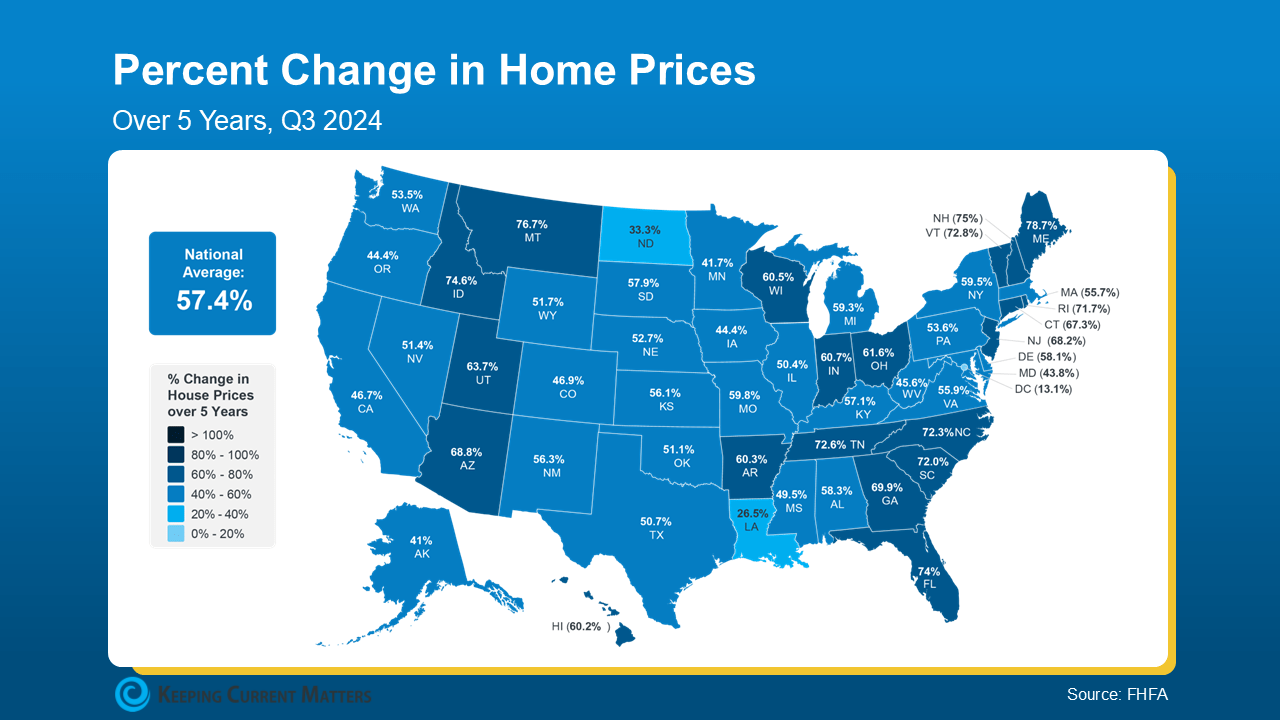
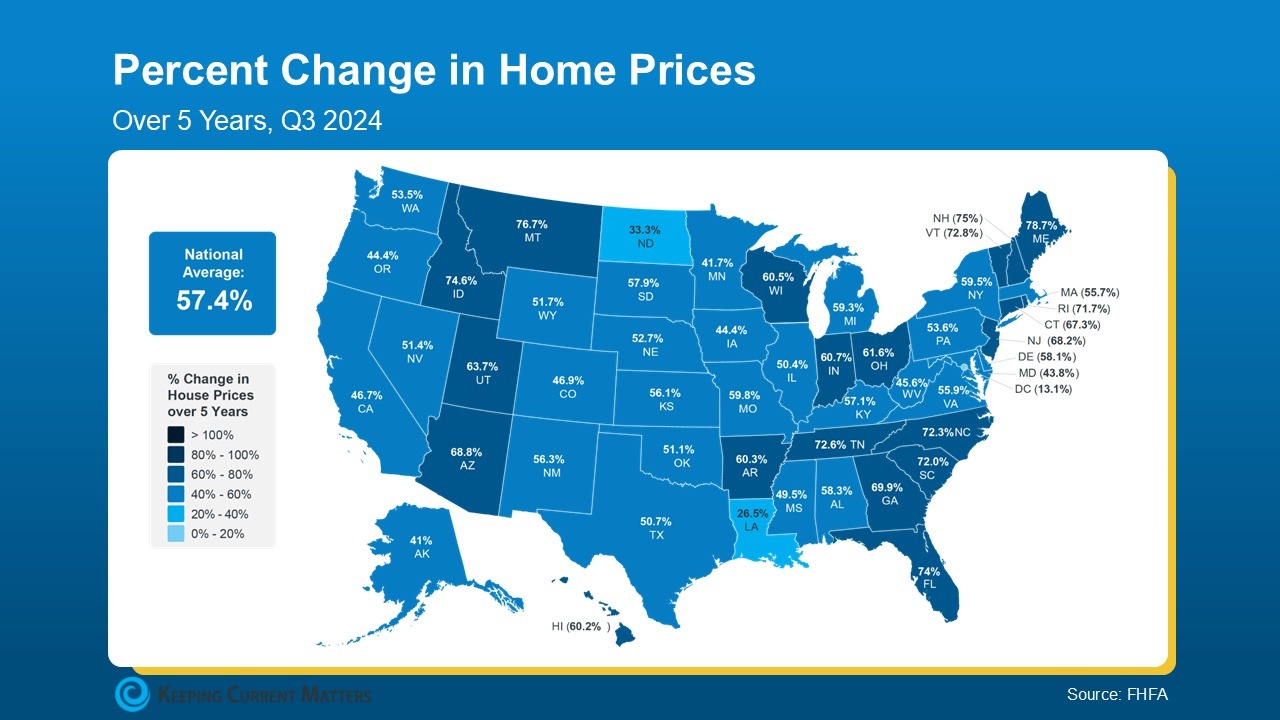
What the original five-year chart shows
The FHFA-attributed map is labeled Q3 2024 and shows five-year home-price change, with a national average of 57.4% and Colorado at 46.9%. These are broad historical price measures, not Telluride property estimates, equity percentages or cash available for retirement.
Compare three possible reasons to downsize
- Housing costs: Compare the current and replacement home's financing, taxes, insurance, utilities, maintenance and HOA obligations. Smaller does not always mean cheaper.
- Daily life: Consider usable space, stairs, upkeep, access to care and services, and travel or family needs.
- Available funds: Estimate sale proceeds after debt payoff and selling costs, then account for the next home and any taxes or financing. Gross equity is not the same as available cash.
The original article cited Chase commentary about a sale opening additional options in retirement. That is a possibility to evaluate, not a promise of financial security. Review a move within your broader plan with the appropriate financial, tax or lending professional. Mountain Rose Realty can help compare local properties and sale scenarios.
For help comparing local properties and sale context, contact Anne-Britt Ostlund at Mountain Rose Realty.
Frequently Asked Questions
- Can home equity automatically fund retirement?
- No. Available proceeds and retirement impact depend on current value, loan payoff, transaction costs, taxes, replacement housing cost, financing, and the broader plan.
- What should I compare before downsizing?
- Estimate sale proceeds after payoff and costs, then compare the next home’s price and full ownership costs, including taxes, insurance, maintenance, utilities, and HOA obligations where applicable.