
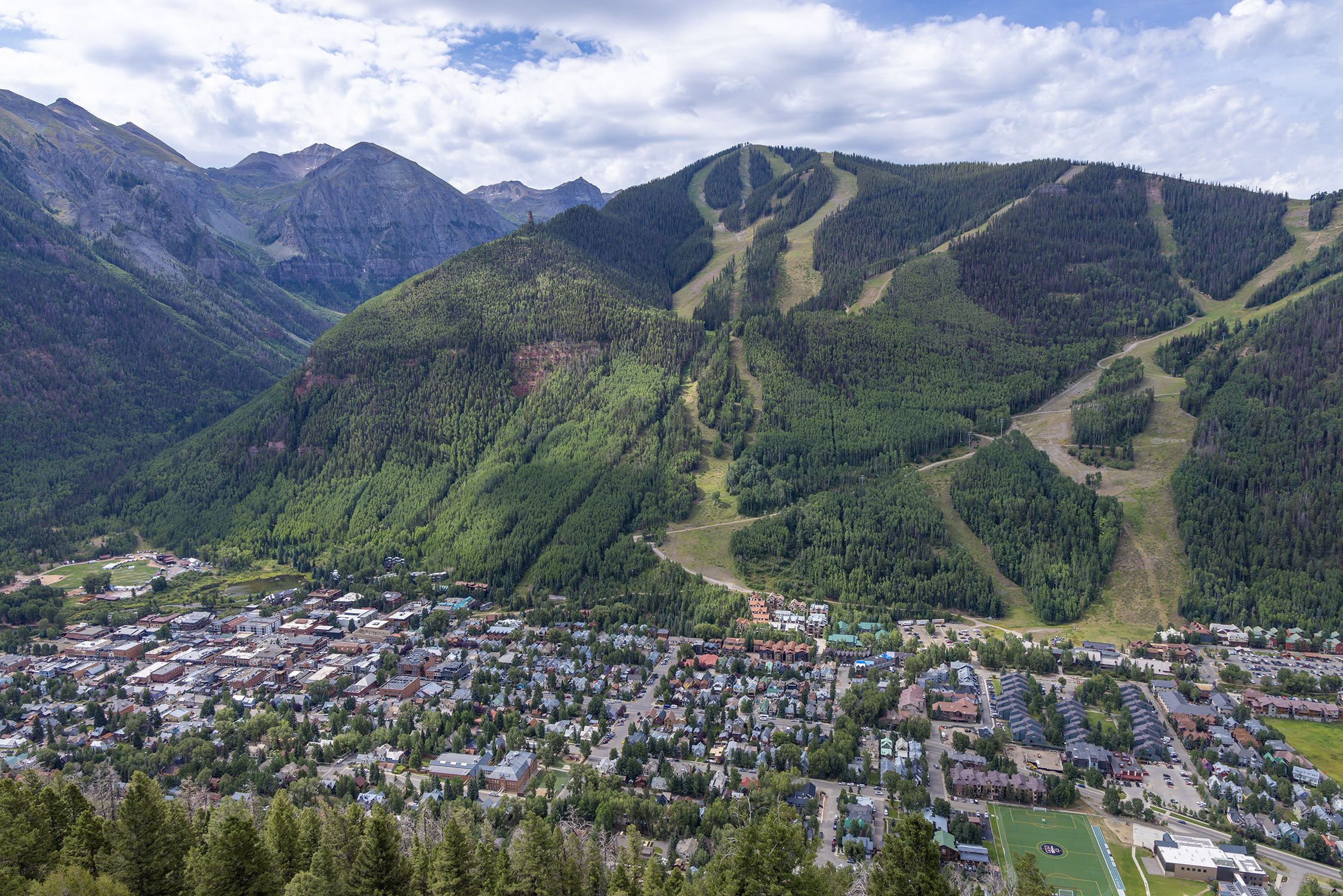
Telluride’s late-summer travel picture is beginning to smooth out.
Destination lodging occupancy from August 20 through September 7 is currently running even with last year at 45%, while several of Telluride’s major festival periods are pacing flat to slightly ahead of 2025.
The bigger story continues to be timing. With Camp Alderwild shifting to the final weekend of August and Labor Day and Telluride Film Festival falling entirely in September this year, daily and monthly year-over-year comparisons are being influenced heavily by the calendar.
Here’s this week’s Telluride Air & Lodging Update from Mountain Rose Realty and Anne-Britt Ostlund.
Telluride Lodging Update
Destination occupancy from August 20 through September 7 is currently 45% — essentially even with last year.
The daily numbers move around considerably depending on the event calendar, but Telluride’s major late-summer festival periods are generally holding their own.
Camp Alderwild: 58% occupancy — flat to 2025
Telluride Film Festival: 60% occupancy — 1% ahead of 2025
Telluride Blues & Brews: 51% occupancy — flat to 2025
That relative stability is encouraging, particularly after the softer lodging numbers seen earlier in August.
Why August and September Comparisons Are a Little Messy This Year
The 2026 calendar matters.
Camp Alderwild took place earlier in August last year but moves to the final weekend of August this year.
Meanwhile, Labor Day weekend and Telluride Film Festival fall entirely within September in 2026, shifting a meaningful portion of demand from August into the following month.
So while August is currently pacing 12% behind 2025, some of that difference reflects timing rather than disappearing demand.
September, meanwhile, is pacing 6% ahead of last year.
Sometimes the most important part of a lodging statistic is understanding why it moved.
Summer Occupancy Remains Slightly Behind Last Year
Across the broader summer season, total destination occupancy is currently 41%, approximately 3% behind 2025.
Paid occupancy is also slightly softer, running about 2% behind last year.
July ultimately closed just 1% below 2025, after bookings improved toward the end of the month.
Summer overall: 41% occupancy, down 3%
Paid occupancy: Down 2%
July: Finished 1% behind 2025
August: Pacing 12% behind
September: Pacing 6% ahead
October: Pacing 6% ahead
That continued strength in September and October is one of the more interesting pieces of the current data.
Telluride’s fall season continues to matter more — not just as a shoulder season between summer and skiing, but as a meaningful travel period of its own.
Early Winter Lodging Is Worth Watching
Winter bookings are still very early.
Historically, a much larger share of Telluride’s winter reservations arrive during September and October, so current numbers should not be treated as a final read on ski-season demand.
Still, there are some early trends worth monitoring.
Total winter occupancy, including paid stays and owner use, is currently pacing 4% ahead of last year, approximately half a percentage point higher.
Paid winter occupancy, however, is running behind.
Current paid occupancy is approximately 7%, compared with 8.3% in 2025, representing a decline of roughly 16% year over year.
That contrast suggests owner usage is helping support total occupancy while paid bookings have yet to catch up.
The Telluride Tourism Board is launching winter marketing early in hopes of building booking momentum through the important September and October reservation window.
Telluride Air Travel Update
Air bookings have remained relatively steady over the last several weeks.
The current data shows overall summer air demand running roughly even to slightly below last year, while the core summer period remains softer.
Core summer air bookings are currently 6% below last year.
By month:
June: Flat
July: Down 9%
August: Down 9%
September: Flat
July and August continue to represent the softer portion of this summer’s air picture.
Blues & Brews Continues to Stand Out
Labor Day week has softened slightly in recent booking data and is now running a couple of points behind last year.
Telluride Blues & Brews week, however, remains 8% ahead of 2025.
That continued strength reinforces the importance of Telluride’s marquee festivals in driving destination travel.
Major events don’t simply fill hotel rooms.
They introduce new visitors to Telluride, bring second-home owners back to town and create the kind of repeat travel that can eventually translate into interest in Telluride Real Estate.
Winter Flight Planning Is Nearly Final
Telluride’s winter air schedule is almost finalized.
The overall route map is expected to remain largely unchanged, with two primary adjustments:
A pause in Breeze Airways’ Orange County service
Several capacity adjustments across the winter schedule
Final route maps and schedules are expected soon.
Early winter air bookings are currently softer, which makes the upcoming fall booking period particularly important.
As winter schedules are finalized and seasonal marketing begins, the next several weeks should offer a clearer picture of ski-season travel demand.
What This Means for Telluride
The current numbers tell a more balanced story than August’s headline occupancy figures might suggest.
August is still down.
But September and October are both ahead.
Film Festival is slightly outperforming last year.
Blues & Brews air bookings are up.
And overall destination occupancy across the coming weeks is essentially flat to 2025.
The more important concern is winter, where paid lodging and early air bookings are currently softer and still need time to develop.
September and October will be critical.
What Air & Lodging Trends Tell Us About Telluride Real Estate
Tourism and real estate are not the same market, but in a destination like Telluride, they are closely connected.
Air access, lodging demand, festival visitation and second-home usage all contribute to the broader ecosystem supporting telluride real estate.
Strong shoulder seasons mean owners have more opportunities to use their homes.
Reliable air access makes second-home ownership easier.
And visitors who repeatedly return to Telluride are often the same people who eventually begin browsing telluride homes for sale.
At Mountain Rose Realty, Anne-Britt Ostlund follows destination trends alongside traditional real estate data because understanding Telluride Real Estate means understanding what brings people here — and what keeps bringing them back.
Whether you’re researching homes for sale Telluride CO, considering a second home, or thinking about selling, the broader health of the destination provides valuable context for the local property market.
👉 Want to explore your options or get a personalized market update?
Let’s talk. Schedule your private consultation today -
📲 Stay connected and get the latest Telluride real estate insights—follow us on social!
https://www.mountainroserealty.co/contact/
https://www.facebook.com/theMountainRose
https://www.instagram.com/themountainrose/