
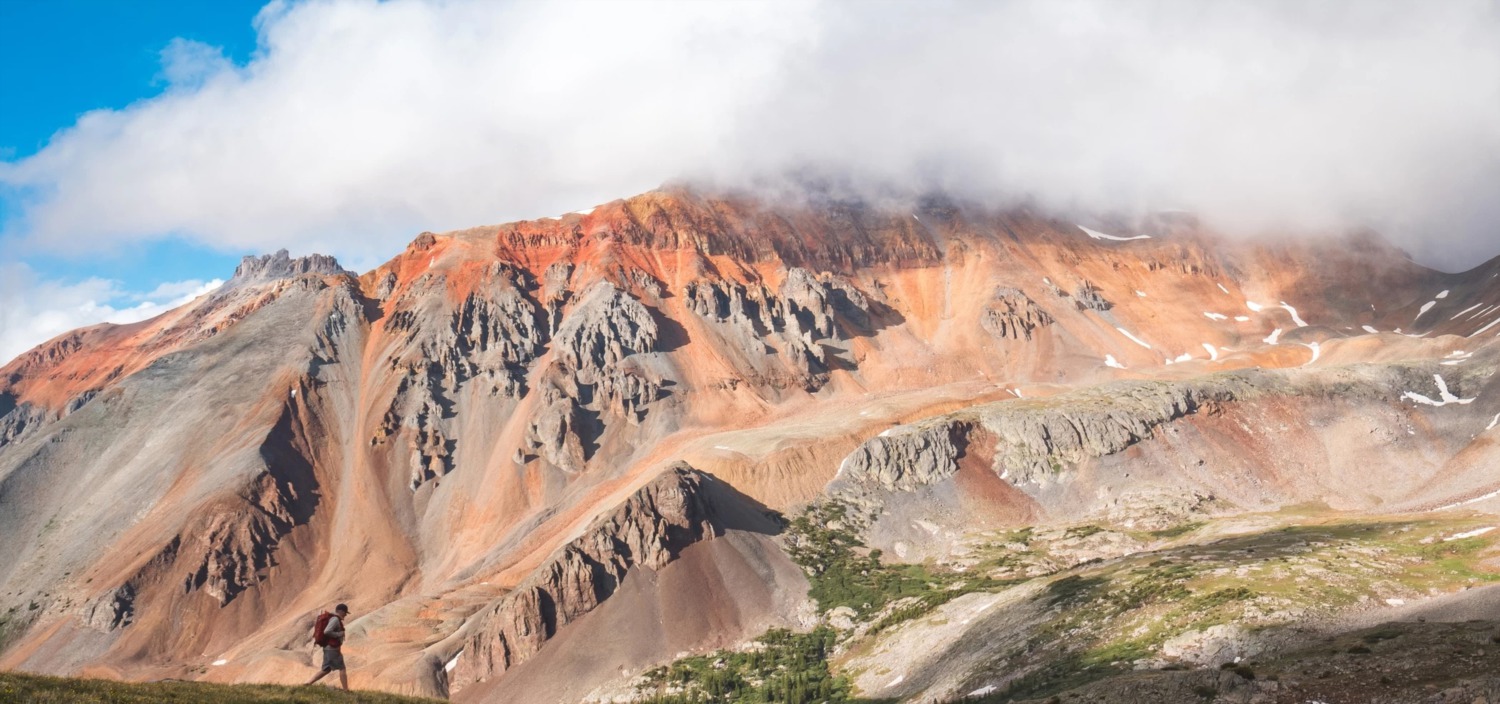
This guide builds on the Telluride Tourism Board’s hiking-etiquette article, originally shared here in August 2024. Plan for the particular trail’s access rules, conditions and waste requirements before leaving town.
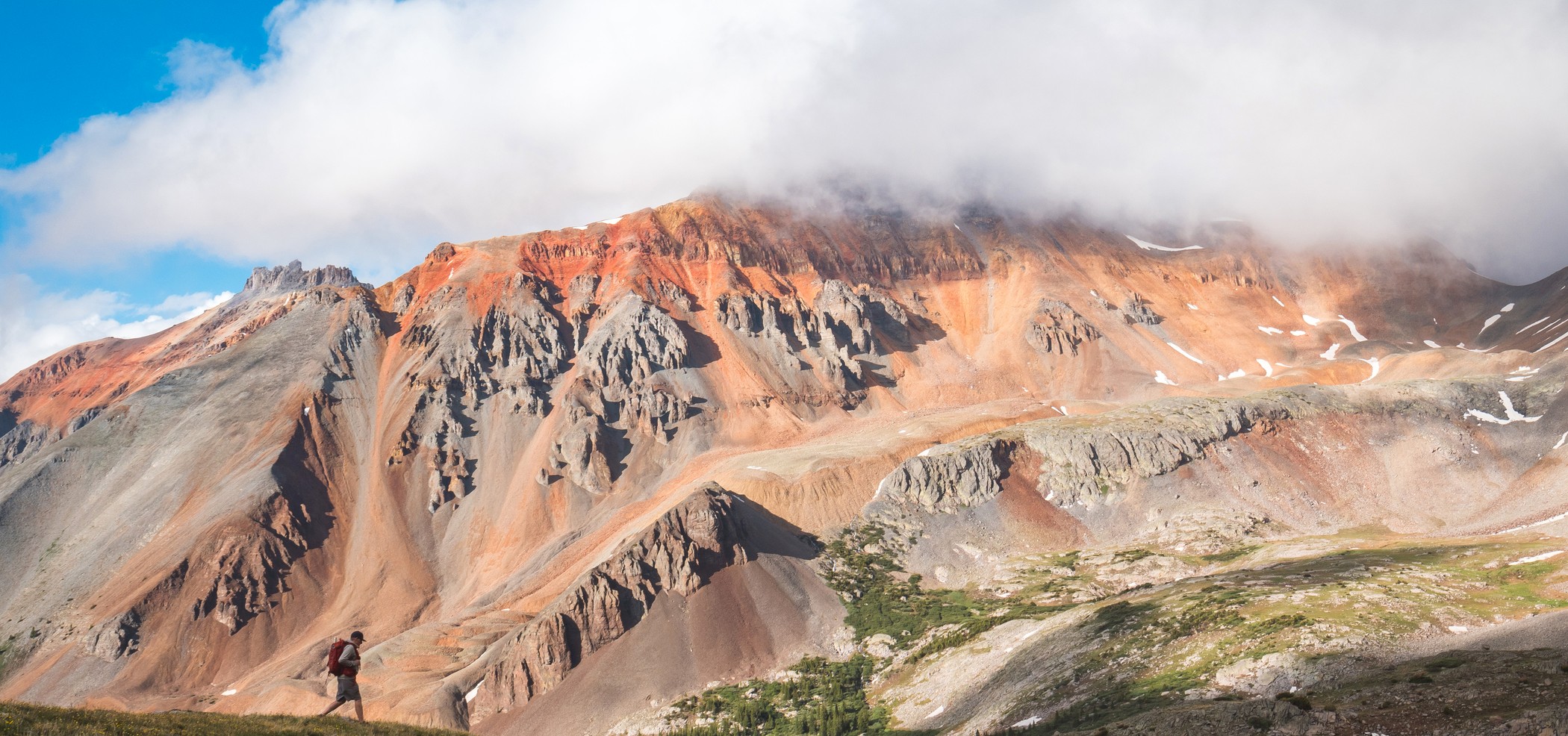
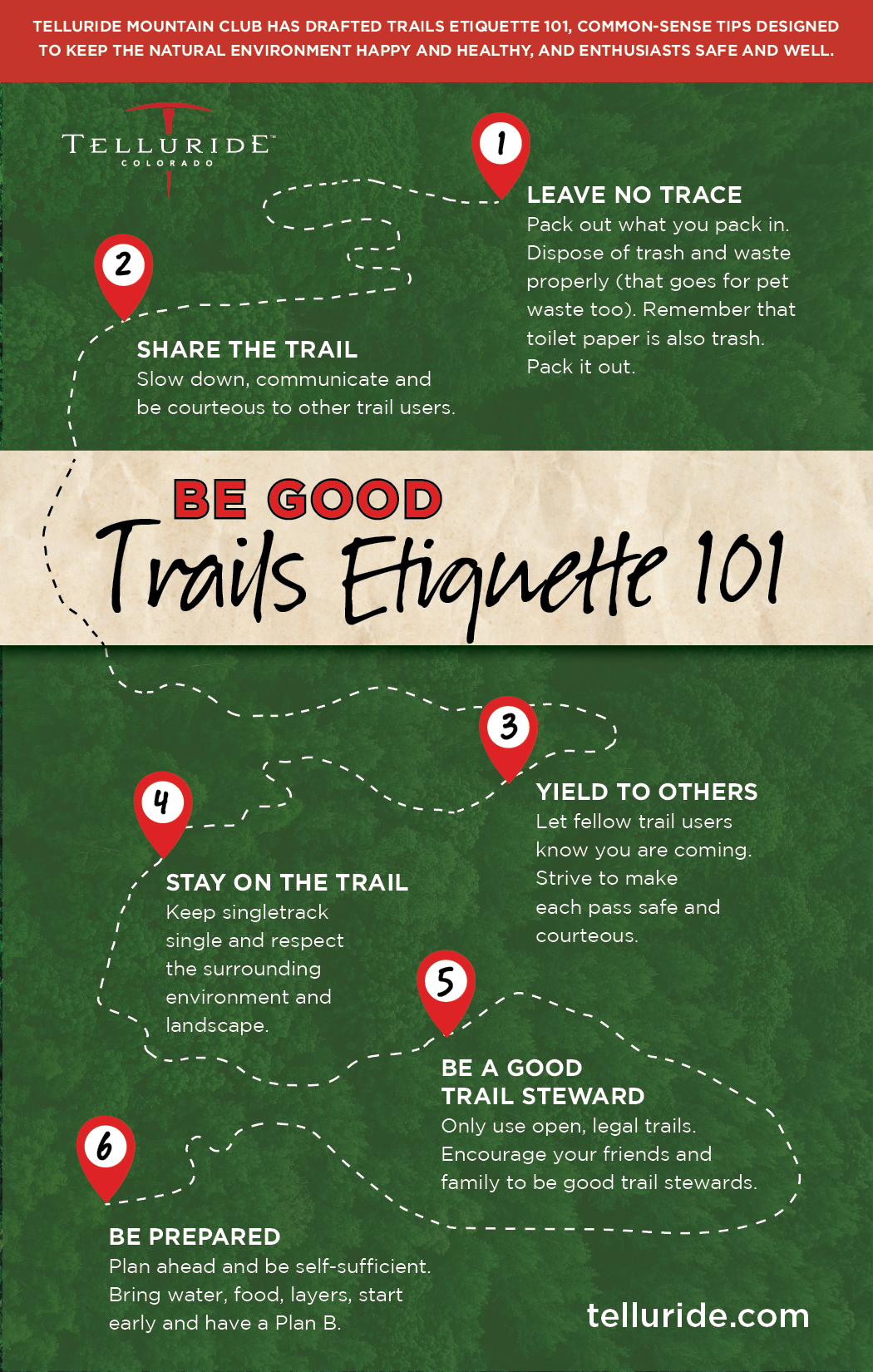
Uphill hikers generally have priority. Give a friendly warning before passing and agree on a safe place to go by; passing on the left is not a reason to step onto fragile vegetation or force another person off a narrow trail. On shared routes, cyclists yield to hikers and horses, and hikers yield to horses. Follow posted local rules and the rider’s directions when meeting stock.
The National Park Service’s general etiquette guide explains these principles. It is general guidance, not a statement that Telluride trails are administered by the Park Service.
Take food scraps, wrappers and other rubbish home or to an appropriate bin. Pick up other litter when you can do so safely. Pack spare bags for dog waste and carry filled bags with you for the entire walk; leaving one beside the trail for later still leaves waste on the trail.
Use an available toilet before setting out. Carry a suitable waste pack-out kit where facilities are absent or the route requires it. Fragile alpine ground, thin soil and heavily used locations may require packing out solid human waste rather than digging.
Where burial is allowed and suitable soil exists, Leave No Trace specifies a cathole 6–8 inches deep, at least 200 feet from water, campsites and trails. Pack out toilet paper and wipes. For urine, choose bare rock, soil or gravel away from water rather than vegetation that animals may disturb for salts. Follow the land manager’s stricter requirements wherever applicable.
This corrects the older article’s mixed 100-foot water setback and 100-yard trail guidance. Consult Leave No Trace’s waste-disposal guidance while planning.
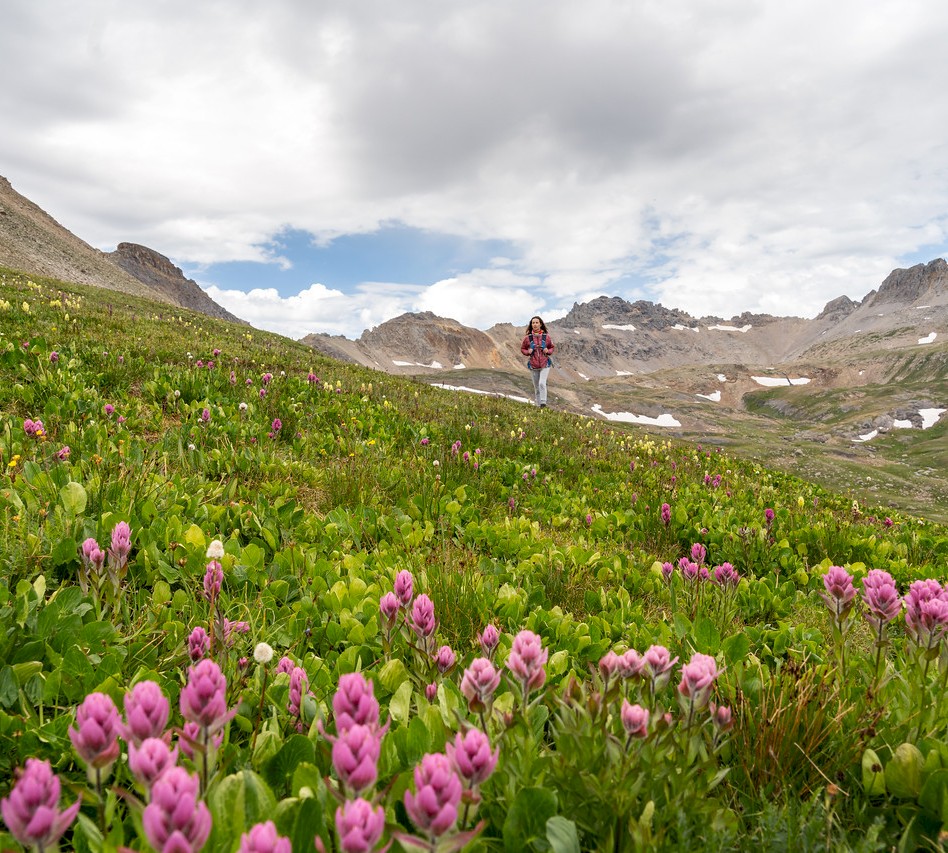
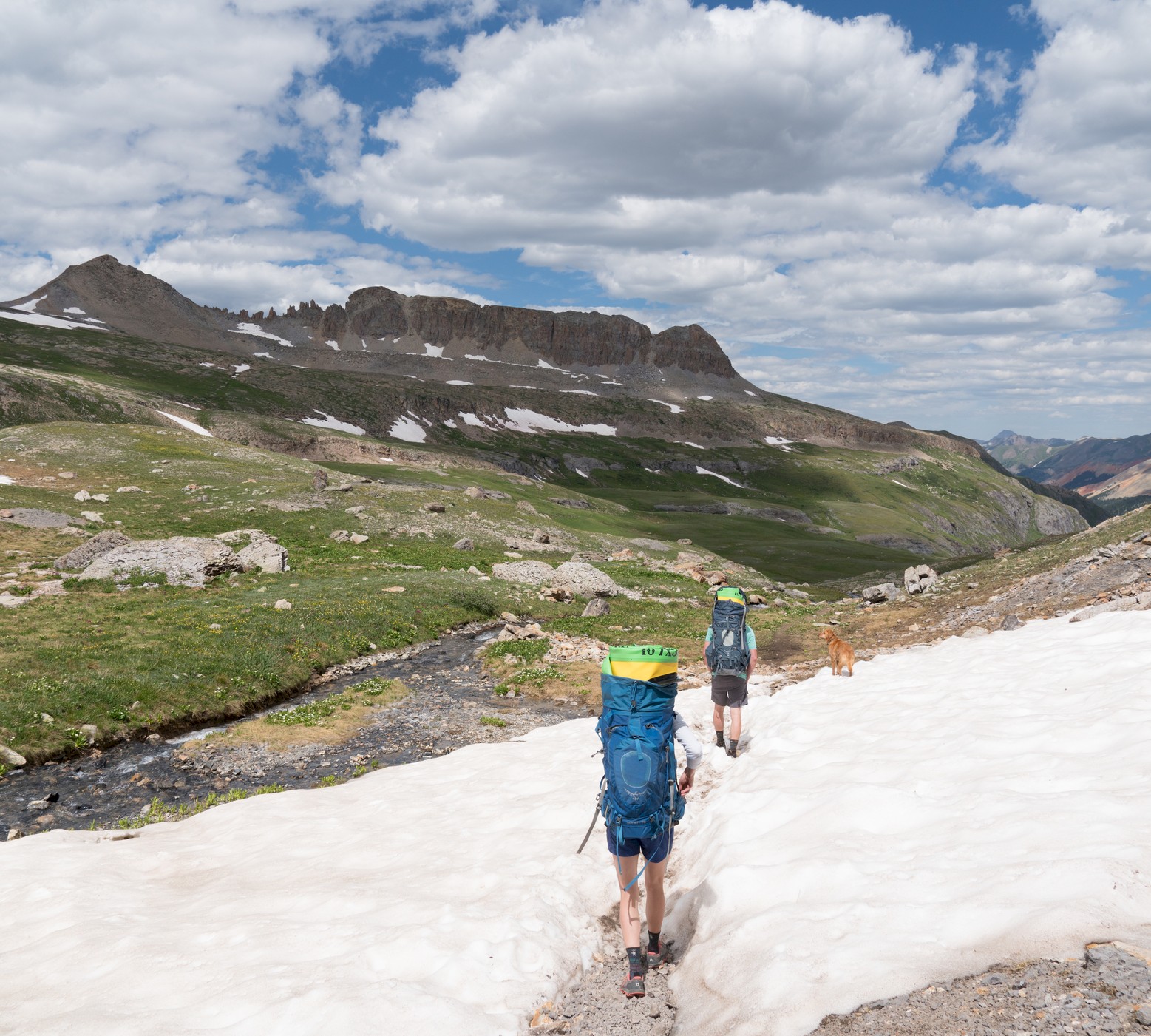
Leave flowers, trees and rocks as you find them, keep wildlife at a distance and avoid building unofficial cairns that could confuse route finding. Stay on the established tread, including switchbacks. Where a muddy section is safe to cross, use the existing trail instead of widening it around the edges. If conditions are unsafe, turn back rather than forcing a crossing or creating a bypass.
Leave No Trace’s durable-surface guidance explains why concentrating use on established routes protects surrounding ground. Check San Miguel County’s trail information and the responsible land manager for the specific route.
Check whether dogs are allowed and what leash rules apply to the route. Town and trail requirements differ, so a rule for one location is not permission elsewhere. Keep pets away from wildlife and other trail users. Leave speakers off, keep voices considerate and allow others to enjoy the natural sounds around them.
Telluride’s trails are part of daily life for many residents and visitors. If outdoor access is part of your home search, talk with Anne-Britt Ostlund at Mountain Rose Realty about the actual route from a property, seasonal access and the activities you want nearby.