

The aspens are brilliant, there’s fresh snow on the high peaks, and Telluride is settling into that beautiful transition between fall and winter. Meanwhile, the latest air and lodging numbers offer an interesting look at how the coming season is shaping up.
For Telluride and Mountain Village homeowners who rent their properties, and for buyers considering a second home or investment property, the October 1–7 Telluride Tourism Board report offers some useful insights.
The big picture? Winter paid lodging bookings are improving, fall air travel has rebounded, and winter airline reservations are still trailing previous years.
Let’s take a closer look at the numbers and what they may mean for Telluride real estate ownership.
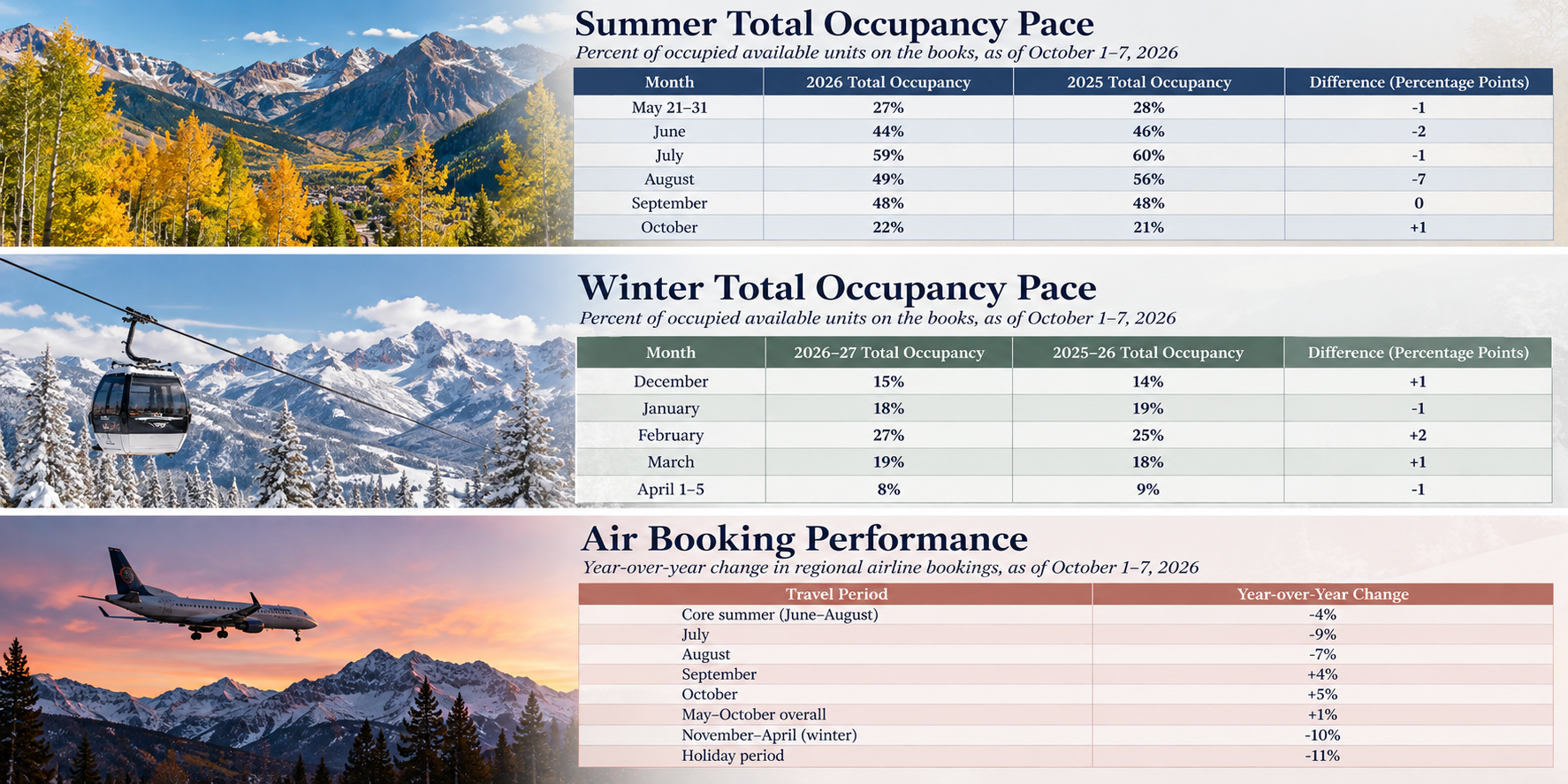
The first half of October is pacing behind last year, with total destination occupancy at 33% compared with 37% during the same period in 2025. For the month as a whole, October is pacing one percentage point behind 2025.
There’s some encouraging news further into the month, however. According to the Tourism Board, occupancy improves around mid-October, with much of the remaining month pacing ahead of last year.
August stands out as the softest month relative to the prior year in this comparison, while September recovered to an even 48%.
For owners participating in the Telluride vacation rental market, the October numbers underscore the importance of flexibility during the shoulder seasons.
Fall foliage, weddings, cultural events, and favorable weather can all influence travel decisions, but booking behavior varies from property to property.
If your property has remaining October availability, it’s worth discussing pricing, minimum-night requirements, and booking windows with your rental manager.
Equally important, occupancy doesn’t tell the whole financial story. A property with fewer rented nights can still perform well if nightly rates hold, while higher occupancy doesn’t necessarily produce higher net income.
For anyone considering a Telluride short-term rental investment, evaluating occupancy alongside achieved average daily rates, operating expenses, and actual rental revenue is essential.
As attention turns toward ski season, the latest lodging data presents a mixed but interesting picture.
Winter paid occupancy is currently at 19%, 4% ahead of the same point last year. Total occupancy stands at 12.5%, 2% behind.
Winter total occupancy pace by month
February currently leads the winter months shown, with 27% total occupancy on the books compared with 25% last year. December and March are also slightly ahead, while January and early April are lagging.
🏡 Thinking about selling before ski season? Let’s talk pricing, timing, and how to position your home for winter buyers. Book a time: https://calendly.com/mountainroserealty
For rental property owners, the increase in paid winter bookings is particularly relevant because paid reservations represent revenue-generating activity.
Total occupancy and paid occupancy measure different things, so it’s worth watching both.
These are early indicators, not guarantees of how the season will finish.
The Tourism Board notes that last winter’s strike and resort closure complicate year-over-year comparisons.
Beginning in December, the organization plans to incorporate two-year comparisons to provide additional context.
That’s important when evaluating seasonal trends. A single year’s numbers, particularly after an unusual season, may not accurately reflect longer-term demand.
Winter Marketing Starts Earlier Than Ever
Another noteworthy development: the Telluride Tourism Board launched its winter destination marketing campaign in mid-August, considerably earlier than its usual October start.
The Soul of the Mountains campaign follows an early booking initiative launched in July and is intended to rebuild traveler connections and encourage reservations for the 2026–27 winter season.
For Telluride vacation rental owners, that means the destination has been actively promoting winter travel earlier in the booking cycle.
Whether that campaign ultimately translates into stronger occupancy or higher rental revenue remains to be seen, but the improving paid booking pace is encouraging.
Air access is an important consideration for Telluride second-home owners and visitors, particularly those traveling from major metropolitan markets.
The latest air report shows that the May–October season is now pacing 1% ahead of last year overall, despite softer bookings during the core summer months.
September’s 4% increase and October’s current 5% improvement suggest that air booking activity has strengthened during the fall.
November–April airline bookings remain 10% behind last year and 20% below the comparable period two years ago. Holiday bookings are also 11% behind despite additional available capacity.
The Tourism Board anticipates substantial booking activity in the coming weeks, but final passenger demand is not yet known.
For property owners, these figures are worth monitoring because convenient air access can influence how travelers plan mountain vacations.
Still, airline booking trends cannot be translated directly into rental occupancy. Some visitors drive, others fly through different airports, and accommodations may be reserved well before flights are booked.
Current air routes and schedules are available through Colorado Flights Alliance.
What This Means for Telluride Real Estate Investors
For buyers exploring Telluride investment property, the latest figures reinforce something I regularly discuss with clients: the financial picture of a mountain home extends well beyond peak ski-season rental rates.
Telluride’s seasonal character is part of its appeal, but that seasonality also matters when evaluating rental income.
A thoughtful investment analysis should consider three things.
Winter holidays, ski weeks, summer festivals, and fall travel can produce different booking patterns. Reviewing several years of actual property performance is more informative than relying on a single high-performing month.
Gross rental revenue is only the beginning. Property management, HOA dues, taxes, insurance, maintenance, utilities, and capital improvements can materially affect net returns.
Short-term rental requirements vary across Telluride, Mountain Village, and surrounding jurisdictions. Zoning, licensing, and association regulations should be verified before making a purchase based on potential rental income.
For additional perspective, explore Mountain Rose Realty’s Telluride real estate investment guide.
🏔️ Weighing a Telluride second home or investment property? Let’s look at some homes together this fall. Book a time: https://calendly.com/mountainroserealty
For many buyers, the objective is a place to spend more time with family, enjoy the mountains, and establish a lasting connection to the community. Rental income may simply help offset ownership expenses.
That’s why I encourage clients to think about how they intend to use their property before deciding where to buy.
A residence near Telluride’s historic downtown offers a different daily experience from a ski-oriented condominium or private mountain home in Mountain Village.
Both markets offer a variety of property types and ownership considerations.
Explore Telluride real estate and Mountain Village real estate to begin comparing available options.
What I’ll Be Watching as Ski Season Approaches
As winter reservations continue to develop, three indicators deserve particular attention: paid lodging occupancy, airline booking momentum, and the forthcoming two-year occupancy comparisons.
Together, they’ll provide additional context for homeowners evaluating rental performance and buyers assessing the market.
The most valuable insights will come from comparing those destination-level trends with the actual income and expenses of individual properties.
Are Telluride winter vacation rental bookings improving?
According to the October 1–7, 2026 Tourism Board report, paid winter occupancy is at 19% and tracking 4% ahead of last year’s corresponding snapshot. Total occupancy remains slightly behind. The final winter results will depend on additional booking activity and actual stays.
Some properties permit short-term rentals, subject to applicable local regulations and HOA requirements. Eligibility must be verified for the specific condominium before purchasing with rental income in mind.
Air accessibility is one factor in destination travel demand, particularly for fly-in visitors. However, airline bookings alone cannot establish future rental occupancy or revenue, since visitors use different transportation options and lodging types.
The October data reveals a market in transition: softer early-fall lodging occupancy, improving paid winter reservations, recovering fall air travel, and winter airline bookings that still have ground to make up.
For homeowners, these numbers offer useful context for upcoming rental decisions. For prospective buyers, they’re a reminder that Telluride real estate ownership deserves a thoughtful evaluation of both the lifestyle and the financial considerations.
After over two decades in Telluride and Southwest Colorado, and as a Certified Luxury Home Marketing Specialist (CLHMS) and REALM Global Exclusive Member, I’ve learned that understanding the nuances of our local market matters far more than chasing any single statistic.
Whether you’re looking for a family mountain retreat, exploring Telluride homes for sale, or evaluating an investment property, I’m always happy to help you make sense of the opportunities.
Anne-Britt Ostlund | Founder & Luxury Real Estate Broker, Mountain Rose Realty
220 E Colorado Ave, Suite 211, Telluride, CO
👉 Want to explore your options or get a personalized market update? Let’s talk. Schedule your private consultation today: https://calendly.com/mountainroserealty
📲 Stay connected and get the latest Telluride real estate insights. Follow us on social! https://www.mountainroserealty.co/contact/ https://www.facebook.com/theMountainRose https://www.instagram.com/themountainrose/
Photo courtesy of Telluride Properties