
April 2023 local-news archive. This article preserves Leslie Vreeland’s Telluride News report on National Weather Service spotter training. The four training dates, registration information and local-weather statements are historical and do not show a current class schedule or registration link.

The article explained that spotters can provide ground observations alongside automated sensors, including information about conditions between sensors. It described spotter work as volunteer activity without a required equipment purchase or financial compensation.
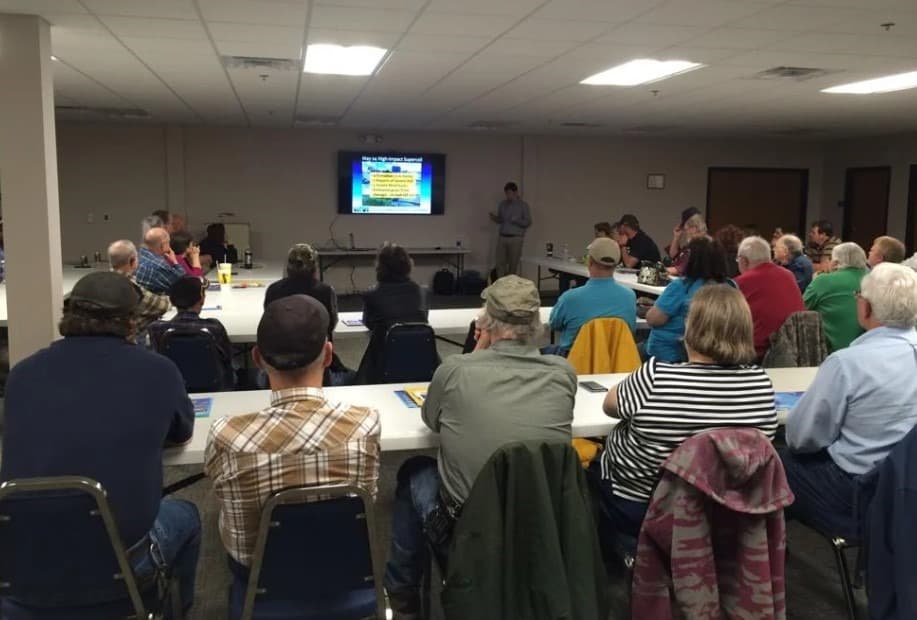
The courtesy photograph accompanying the original story shows a training in Goodland, Kansas. It is an illustration of the program, not a picture of one of the four Colorado and Utah sessions listed below.
NWS Grand Junction meteorologist Lucas Boyer explained why local reports help: lightning, damaging wind, hail, flash floods and winter weather can vary sharply across high peaks, mesas, canyons and desert terrain. He described dozens of sensors between Montrose and Telluride, formal observation locations in those towns, and neighborhood networks in Ridgway. He said the neighborhood readings offered useful local context but were not used for official climatology.
Rainfall reports can help forecasters assess flash-flood potential, but a single rainfall reading cannot show where a storm is going or how long it will remain. Ground observations supplement the wider forecasting system; volunteers should observe safely and follow NWS reporting guidance.
The report cited a National Weather Service Boulder map covering 1950 through 2022. It listed Mesa County with 10 tornadoes, Delta with four, Montrose with two and La Plata with five. It listed San Miguel, Ouray, Dolores, San Juan, Hinsdale and Gunnison counties with zero in that selected historical map. Those counts are neither statewide rankings nor proof of zero future risk.
The original notice said additional dates would be added and linked to a short registration URL. That link and those dates are not current registration instructions.
Boyer also emphasized that volunteers were not expected to be available constantly or give up personal travel. A broad network helps when some participants are away. Winter weather and summer thunderstorms were particular priorities in the original appeal.
For current Skywarn and spotter information, use the National Weather Service Grand Junction Skywarn Program. In an emergency, follow current official warnings and local instructions rather than this archive.