

November 2023 economic archive. This article originally used recession and unemployment forecasts to argue against a housing crash. The forecasts are retained below with their time periods. They cannot establish that a recession, foreclosure increase or property-price decline will not occur.
The Wall Street Journal's 2023 survey report said economists lowered their average probability of a recession within the next year from 54% in July to 48% in the later survey. That does not mean that 48% of economists expected a recession. An average probability combines respondents' estimates of likelihood; it is different from counting respondents who answer yes.
It was a national macroeconomic forecast, not a prediction about Telluride home values. Forecasts can change as employment, inflation, credit and consumer spending change.
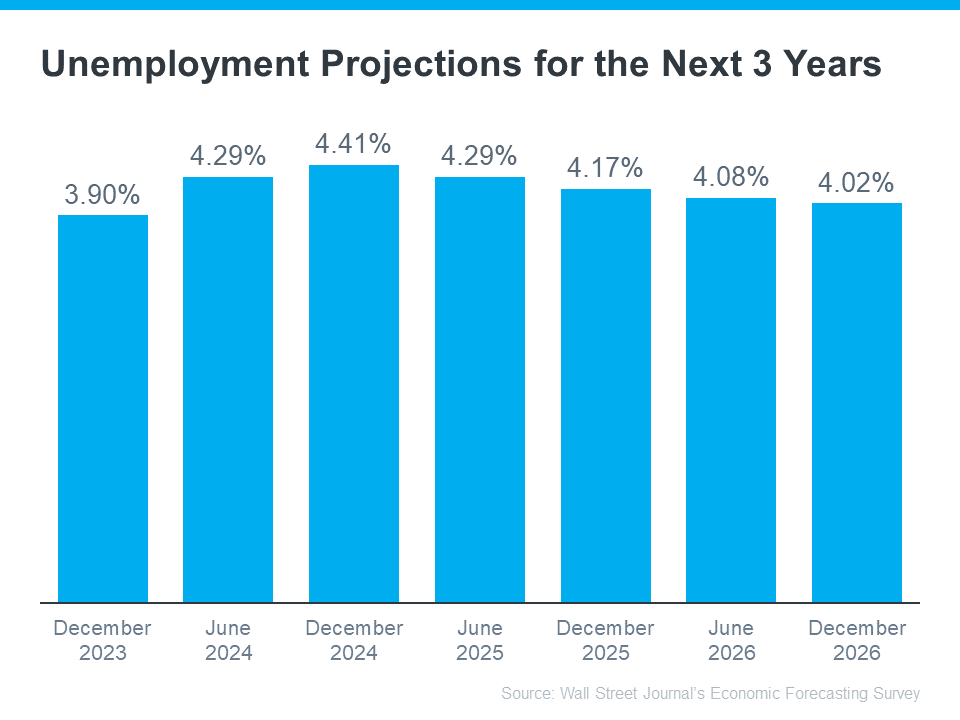
The original graphic attributes its projections to the Wall Street Journal's Economic Forecasting Survey. Its labels show December 2023 at 3.90%; June and December 2024 at 4.29% and 4.41%; June and December 2025 at 4.29% and 4.17%; and June and December 2026 at 4.08% and 4.02%. These are the graphic's historical projections, not observed outcomes or current forecasts. The exact original survey vintage behind every plotted value has not been independently reconciled here.
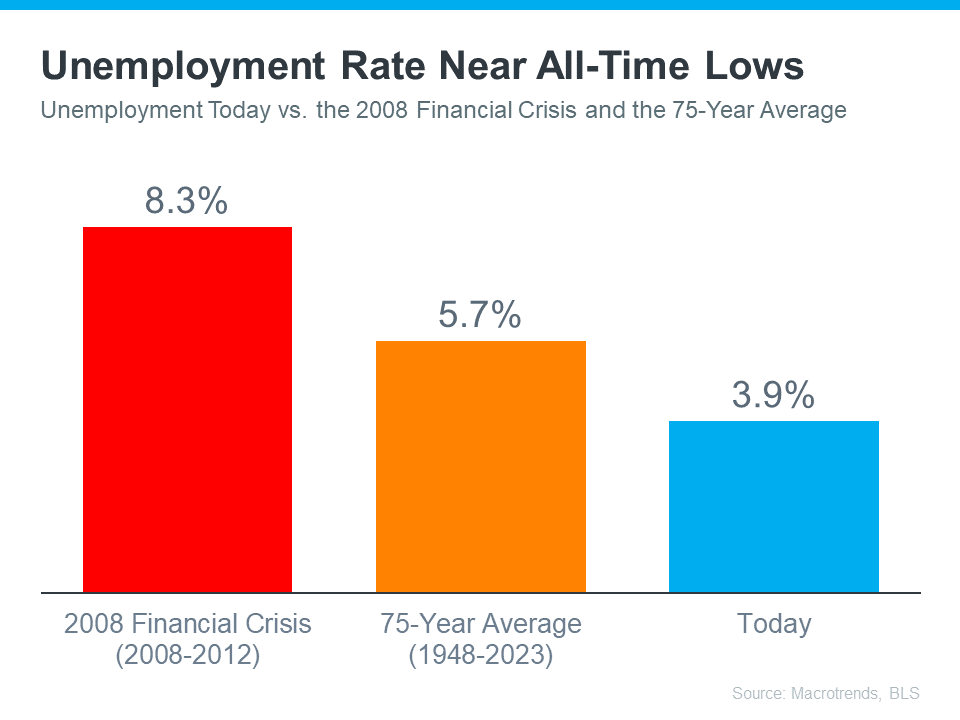
The second archived graphic labels 8.3% for the 2008–2012 financial-crisis period, 5.7% for a 1948–2023 average and 3.9% as “Today.” Here, “Today” belongs to the original 2023 article. The 8.3% label is not a single 2008 observation or a level below which foreclosures cannot occur. The graphic credits Macrotrends and BLS but does not document the calculation of its multi-year averages.
For observed national unemployment, use the dated observations in the BLS unemployment series hosted by the Federal Reserve Bank of St. Louis. Do not compare an average over several years with a single month without explaining the different periods.
Employment matters to households' ability to make payments, but it is only one influence. Debt terms, savings, property expenses, local employment and individual circumstances also matter. A national forecast cannot establish the risk on a particular mortgage or the future supply of distressed homes in San Miguel County.
Buyers can stress-test a purchase against a period of reduced income and higher recurring costs. Sellers can review comparable closed sales and competing listings. Owners concerned about payments should contact their mortgage servicer about available options before relying on a general market article. The retained charts provide historical context; they are not assurances of a crash-free market.
For a property-specific discussion, contact Anne-Britt Ostlund at Mountain Rose Realty. Bring your timing, financing assumptions and comparable-property questions.