
Current-code note: This guide is a due-diligence framework, not a determination that a particular ADU is permitted, rentable, deed-restricted, conforming, financeable, or value-enhancing. The Town of Telluride short-term-rental guidance, the Town of Mountain Village community-housing guidance, and the San Miguel County Land Use Code each identify different current rules and update paths. Confirm the exact parcel, jurisdiction, recorded documents, permits, association rules, and intended use with the relevant authority and qualified professionals before acting.
An accessory dwelling unit (ADU) is a separate living unit associated with a primary home. In the Telluride area, a buyer may encounter a caretaker apartment, an above-garage suite, a detached guest building, or housing subject to a recorded restriction. The marketing name does not establish what is legally permitted. This guide explains the records and questions needed to compare these properties in the Town of Telluride, Mountain Village, and unincorporated San Miguel County.
An ADU generally provides independent living facilities, including cooking, bathing, and sleeping areas. A second kitchen or separate entrance is a reason to investigate the unit, not proof of an approved ADU. Ask the relevant planning and building offices how the space is classified and what its permit record allows.
ADUs go by many names. Secondary suite, granny flat, in-law suite, casita, mother-in-law unit, accessory apartment, additional dwelling unit, garage apartment, basement apartment, and carriage house all refer to variations of the same idea. In Telluride you will hear "caretaker unit," "casita," "guest house," and "lockoff" used in different contexts; the legal category under local code is what matters, not the marketing word.
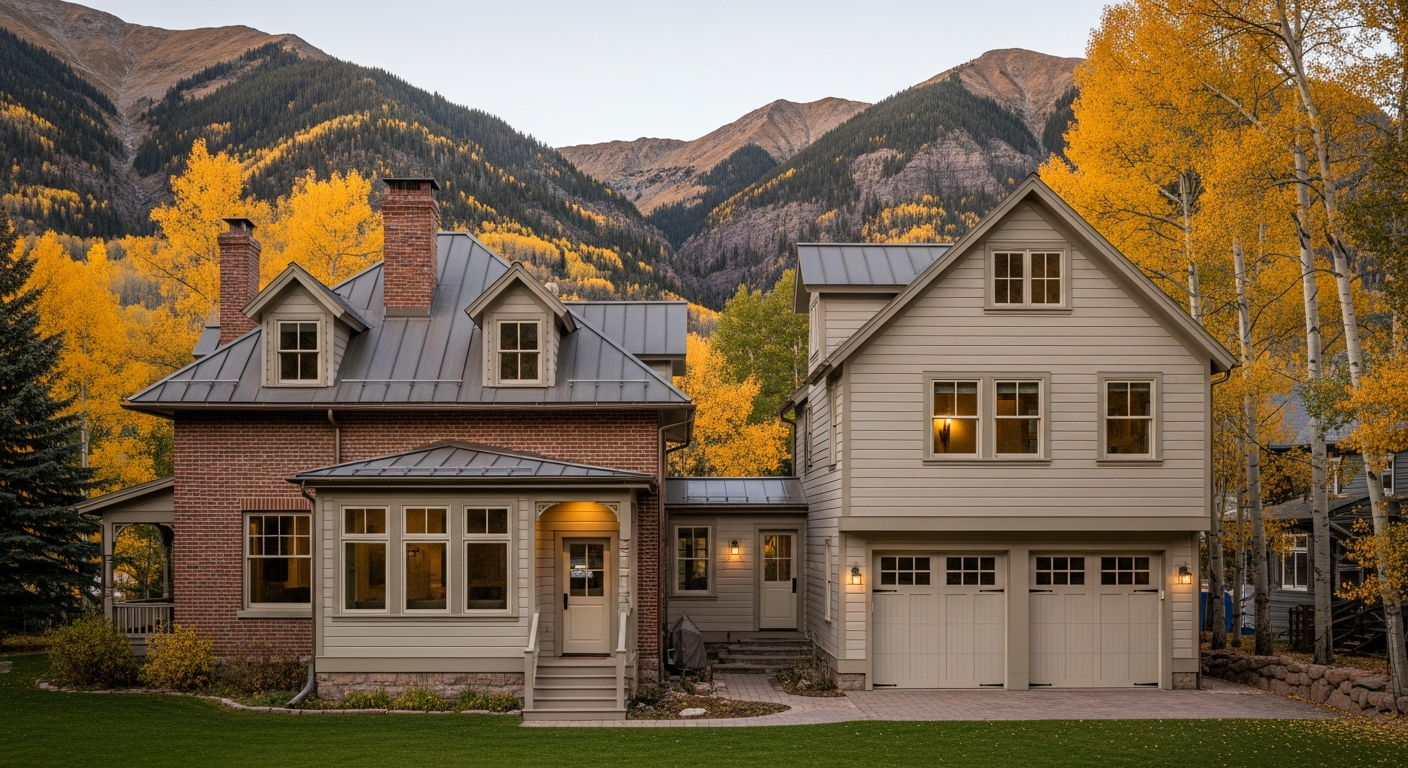
There are two broad physical types. An attached ADU is part of the main structure — a basement apartment with its own exterior entrance, a unit above an attached garage, or a wing of the house with its own kitchen and bath. A detached ADU is a separate building on the lot — a small cottage behind the main house, an apartment over a detached garage, or a converted outbuilding. Legal treatment of attached and detached units can differ inside the same jurisdiction.
ADUs are usually smaller than the primary residence. Many local codes cap the size of the secondary unit relative to the main house and include their own setback, height, and parking standards. Whether the unit can be rented, to whom, and how is governed by local rules that are not uniform across the region.
An ADU can be relevant to a buyer’s intended use of a property: separate household space, a caretaker arrangement, a long-term tenancy, or another use allowed by the controlling documents and current rules. The usefulness of any particular unit depends on its permits, physical condition, recorded restrictions, association rules, local code, financing, and the buyer’s plans.
In the Telluride region, prospective buyers may encounter units marketed as caretaker space, workforce housing, guest space, lockoffs, or rental space. Those labels do not establish a legal category or approved use. Confirm the record for the specific parcel before treating a unit as an ADU or assuming it can be occupied or rented in a particular way.
Identify the jurisdiction for the actual parcel. This guide covers three common authorities near Telluride; it does not treat every surrounding incorporated town as part of one of these jurisdictions.
For a parcel within the Town of Telluride, start with the Town's planning and building staff and its short-term-rental guidance. Confirm the current code and the exact unit's approvals rather than applying a general description to every zone.
Mountain Village is a separate municipality. Its development approvals, housing programs, and rental rules must be checked independently of those in the Town of Telluride. Start with the Town's housing resources and request the relevant planning and building records for the parcel.
For unincorporated property, consult the San Miguel County Land Use Code and County staff. A Telluride mailing address does not establish that a property is inside the Town. Check the parcel boundary and authority before applying Town, Mountain Village, or County rules.
Rules from one jurisdiction should not be carried over to another. Confirm the parcel's zoning, approved use, permit history, and recorded restrictions with the relevant offices. If documents conflict or the proposed use is unclear, resolve that issue before relying on the unit in a purchase plan.
Some properties may have recorded restrictions affecting occupancy, rent, resale, or other uses of an accessory unit. The recorded instrument, rather than a listing label, controls. Review it in full with the relevant program administrator, title professional, and qualified counsel before closing.
A restriction can limit intended uses and may affect marketability or valuation, but the effect cannot be stated as a general rule. Confirm the particular restriction, its term, eligibility and reporting requirements, enforcement provisions, association rules, and current program status before relying on rental income or a personal-use plan.
Short-term rental rules, definitions, licensing, zoning, owner-occupancy requirements, and any caps or restrictions vary by jurisdiction and can change. An ADU is not presumed eligible for short-term rental.
Before relying on rental income, confirm the parcel’s jurisdiction, current code, license status, zoning, recorded restrictions, association rules, and permitted use directly with the relevant authority. A rental pro forma does not establish that a particular unit may be rented or what income it may produce.
A secondary space may be permitted and conforming, legally nonconforming under a prior approval, subject to a recorded restriction, or unpermitted. The applicable category and the resulting rights are determined by the property’s actual permits, current code, records, and jurisdictional review; they should not be inferred from age, prior use, marketing language, or the presence of a kitchen and bath.
Before purchase, request the relevant permit and inspection history, current zoning or land-use confirmation, open-permit or violation records, title documents, association documents, and any required compliance review. Ask qualified financing, appraisal, insurance, construction, and legal professionals how the documented condition affects their own analysis. A unit should be marketed and described only as supported by the applicable records.
An ADU does not establish a fixed premium or guarantee a higher resale price. Ask an appraiser and broker to compare recent sales with similar unit permissions, restrictions, condition, and location. Separate the value of additional space from any income assumption.
Review the cost of operation, maintenance, required compliance work, and any occupancy or resale restrictions. A unit that fits one buyer's intended use may not fit another's. The effect on value requires current property-specific evidence.
For a seller, accurately describe the documented status of the space. Resolve uncertain permit or use history with the appropriate professionals before marketing it as an approved ADU or promising a rental use.
Mountain Rose Realty can help a client identify questions to take to the relevant jurisdiction and qualified professionals. It cannot determine legal status, rental eligibility, appraisal treatment, financing, insurance, or resale value without the records and specialists appropriate to the property.
If you are evaluating a property with a secondary unit, contact Anne-Britt Ostlund at (970) 759-4886 to discuss the property and assemble a due-diligence checklist. Compare current options in property search.