
October 2026 | Telluride & Mountain Village, Colorado
By Anne-Britt Ostlund | Founder & Luxury Real Estate Advisor, Mountain Rose Realty
Winter is approaching in Telluride, Colorado, and the latest air and lodging numbers reveal an encouraging shift for property owners.
According to the Telluride Tourism Board's October 15 Peak Sheet, fall occupancy is finishing stronger, winter lodging reservations are improving, and paid winter bookings have moved slightly ahead of last year.
Air travel, however, is telling a different story. Winter airline bookings remain behind, despite increased holiday flight capacity.
For Telluride and Mountain Village homeowners, particularly those who rent their properties, these trends offer valuable perspective on the upcoming ski season and the broader Telluride short-term rental market.
October is showing renewed momentum as Telluride transitions from fall foliage and festivals toward winter.
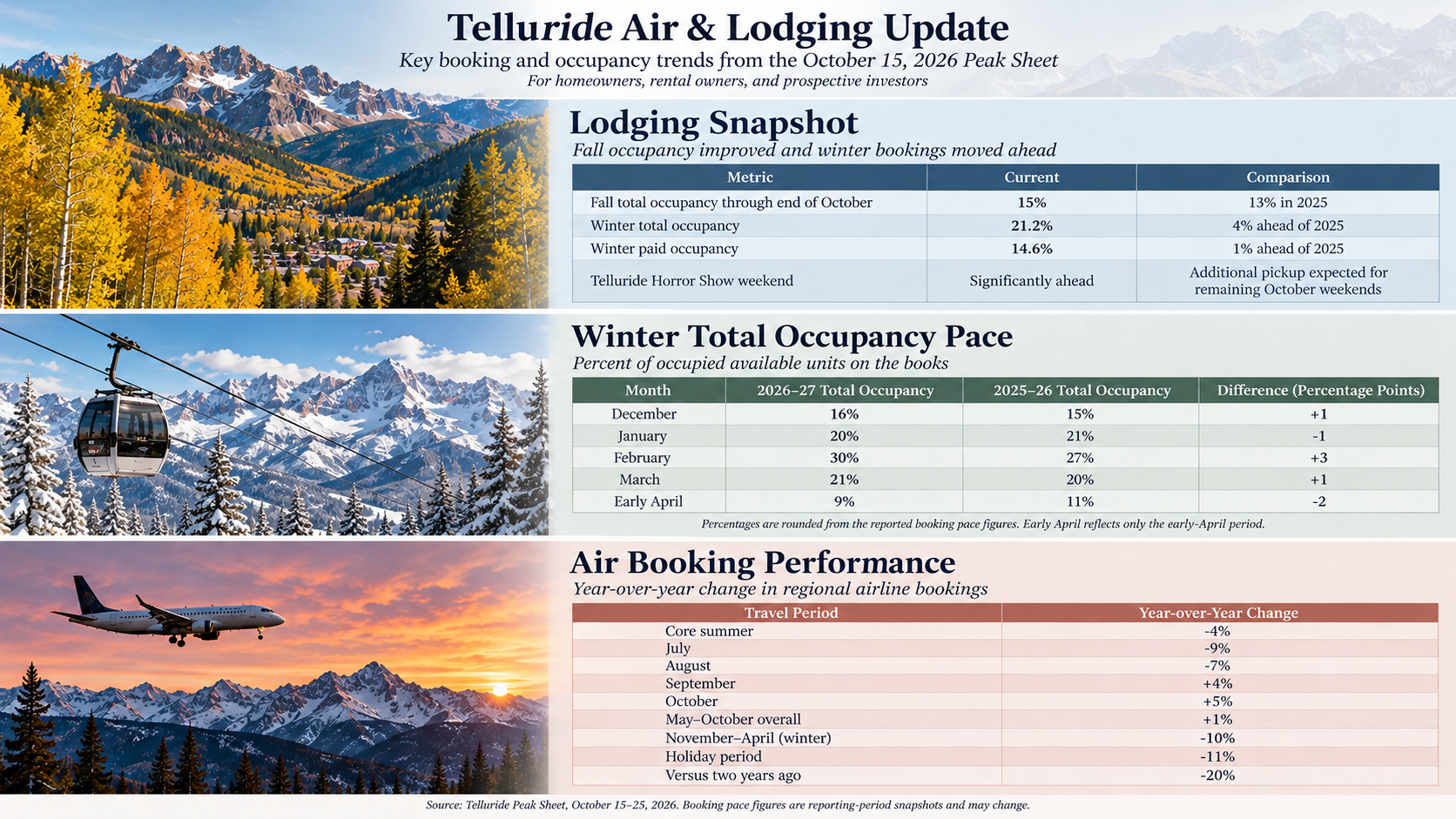
The Tourism Board reports total occupancy through the end of October at 15%, compared with 13% in 2025, describing an 11% year-over-year improvement.
The October 16-18 Telluride Horror Show weekend was pacing significantly ahead of last year, with additional occupancy gains expected during the remaining October weekends.
For vacation rental owners, fall events and seasonal travel can provide opportunities to capture bookings outside the traditional summer and winter peaks.
Winter lodging reservations have strengthened over the past several weeks. Both total occupancy and paid occupancy are now pacing ahead of last year.
Metric | Current Winter Pace | Change vs. Last Year |
|---|---|---|
Total winter occupancy | 21.2% | Up 4% |
Paid winter occupancy | 14.6% | Up 1% |
The improvement in paid occupancy is particularly encouraging for Telluride short-term rental owners.
Paid occupancy represents revenue-generating reservations, while total occupancy also accounts for dates removed from rental availability, including owner-blocked dates.
For homeowners using rental income to help offset property expenses, paid occupancy is an especially useful measure of booking performance.
📈 Own a rental in Telluride or Mountain Village? Let's look at how your property is pacing for winter: Schedule a private consultation
The Tourism Board's monthly occupancy comparison highlights how demand is developing across the upcoming ski season.
Month | Winter 2026-27 | Winter 2025-26 | Difference |
|---|---|---|---|
December | 16% | 15% | +1 point |
January | 20% | 21% | -1 point |
February | 30% | 27% | +3 points |
March | 21% | 20% | +1 point |
Early April | 9% | 11% | -2 points |
February stands out, with total occupancy pacing three percentage points ahead of last year.
December and March are also ahead, while January and early April remain slightly behind.
For rental property owners, these differences reinforce the value of evaluating individual booking periods rather than applying the same pricing and availability strategy across the entire winter.
Holiday weeks, ski conditions, school calendars, and booking patterns all influence demand throughout the season.
Airline bookings provide another perspective on the regional tourism economy.
The Tourism Board reports that overall May through October airline bookings are now 1% ahead of 2025, supported by improving fall travel.
Travel Period | Year-over-Year Change |
|---|---|
May-October overall | +1% |
Core summer | -4% |
July | -9% |
August | -7% |
September | +4% |
October | +5% |
July and August experienced softer booking activity, but September and October have helped bring the overall May-October season slightly ahead of last year.
For Telluride second-home owners and investors, convenient air access remains an important part of the mountain ownership experience. It influences how easily owners can enjoy their homes, welcome family and friends, and attract guests from outside the region.
While winter lodging reservations are improving, advance airline bookings remain behind.
According to the Tourism Board:
November-April airline bookings: Down 10% year over year.
Two-year comparison: Down 20%.
Holiday airline bookings: Down 11%, despite additional capacity.
Winter bookings typically build during the weeks leading into ski season, making the coming months an important period to watch.
The Colorado Flights Alliance continues to support regional air access through Montrose Regional Airport (MTJ) and Telluride Regional Airport (TEX).
For homeowners who travel frequently from out of state, direct flights and convenient connections can make a substantial difference in how often they use their properties.
Current schedules are available through Colorado Flights Alliance.
Following the challenges of last winter, the Telluride Tourism Board moved its winter marketing efforts forward.
An early booking campaign launched in July, followed by the broader Soul of the Mountains campaign in mid-August, considerably earlier than its traditional October launch.
The campaign focuses on rebuilding connections with visitors and encouraging earlier winter reservations.
As the season approaches, the Tourism Board will continue monitoring booking performance. Beginning in December, it also plans to provide two-year comparisons to account for the disruptions associated with last winter's strike and resort closure.
For property owners, these broader destination marketing efforts are worth following alongside their individual rental booking activity.
The latest numbers offer encouraging signs for winter lodging, but individual properties can perform quite differently from the destination as a whole.
Three priorities stand out as the season approaches.
1. Evaluate your booking pace. Compare current paid reservations with the same point last year, paying particular attention to holiday periods and February's stronger destination-wide pace.
2. Review pricing and availability. Work with your rental manager to evaluate nightly rates, minimum stays, and opportunities to capture additional bookings.
3. Keep the bigger picture in mind. Occupancy is important, but achieved nightly rates, management costs, and net rental income ultimately determine financial performance.
For those considering selling an income-producing property, documented rental performance can also be valuable information when discussing the home's investment appeal with qualified buyers.
For buyers exploring Telluride investment property, particularly condominiums and second homes with rental potential, the latest lodging figures provide useful market context.
Before purchasing, I recommend evaluating:
Rental eligibility: Local short-term rental regulations, licensing requirements, and HOA restrictions.
Historical rental performance: Actual revenue, paid occupancy, nightly rates, and seasonality.
Operating expenses: Property management, HOA dues, insurance, maintenance, taxes, and utilities.
Personal usage: How often you plan to enjoy the property and which dates you prefer to reserve.
Location and accessibility: Proximity to skiing, the gondola, downtown amenities, and transportation.
A successful purchase starts with understanding how a particular property fits your financial goals and the lifestyle you envision.
Whether you're exploring Mountain Village real estate, Telluride luxury condominiums, or homes for sale in Telluride, CO, the right strategy considers both the numbers and the ownership experience.
🔑 Weighing a Telluride condo or second home with rental income in mind? Let's run the real numbers on a few properties together: Schedule a private consultation
Air access, lodging activity, and destination marketing are all pieces of the broader Telluride economy.
For buyers considering a second home, accessibility and year-round activities contribute to the appeal of ownership. For investors, seasonal rental demand is one component of evaluating an income-producing property.
At Mountain Rose Realty, I follow these trends alongside traditional Telluride Real Estate indicators, including property sales, inventory, pricing, and buyer activity.
Together, they help provide a more complete understanding of the market.
For additional perspective, read our earlier Telluride air and lodging analysis and follow our Telluride lifestyle updates on Instagram.
Yes. As of the October 15 report, winter paid occupancy is 14.6%, up 1% from last year, while total occupancy is 21.2%, up 4%.
Winter reservations typically build during the fall as travelers finalize holiday plans and ski vacations. The Tourism Board identifies the coming weeks as an important booking period for the upcoming winter season.
Potentially. Rental eligibility depends on the property's location, applicable licensing and zoning requirements, and any HOA or deed restrictions. These details should be verified before purchasing a property with rental income in mind.
The October numbers offer a cautiously encouraging picture for the upcoming ski season.
Fall lodging has strengthened, paid winter reservations are improving, and February is showing particularly positive momentum. Airline bookings still have ground to make up, making the next several weeks important for understanding winter demand.
For existing homeowners and prospective buyers, these updates provide another layer of insight into the Telluride vacation rental market and the opportunities and responsibilities that come with property ownership.
With over two decades of experience in Telluride and Southwest Colorado, along with my CLHMS designation and membership as an Exclusive Member of REALM Global, I bring both local perspective and luxury market expertise to helping clients make informed real estate decisions.
Anne-Britt Ostlund | Founder & Luxury Real Estate Advisor, Mountain Rose Realty
220 E Colorado Ave, Suite 211, Telluride, CO
📲 Stay connected for the latest Telluride real estate insights. Follow us on Instagram!
Source: Telluride Tourism Board, Peak Sheet, October 15–25, 2026 edition.